
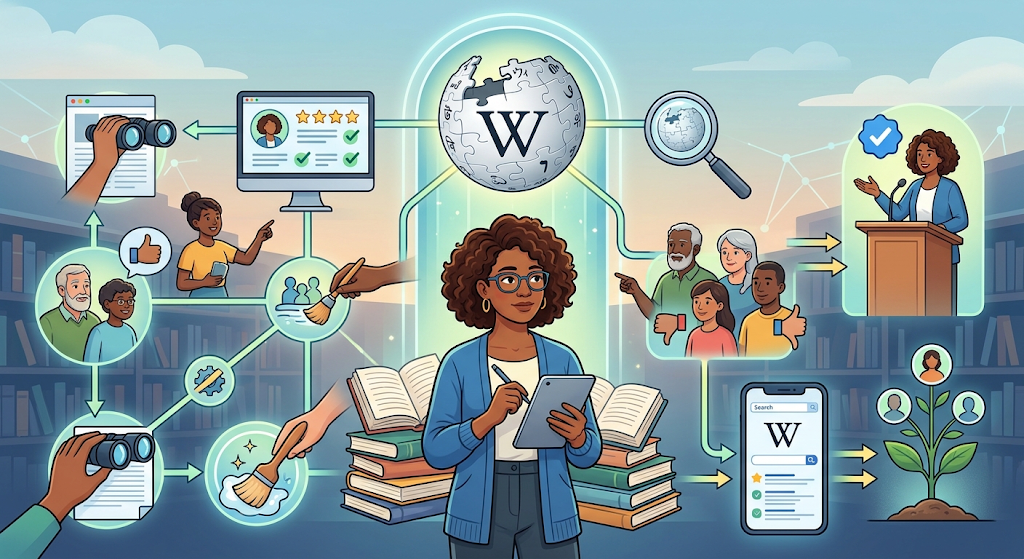
Every author wants to be trusted. Readers trust names they can check. This guide explains the role of Wikipedia for authors in simple words. A Wikipedia page is beyond just a badge. It is proof. It tells the world an author is real and notable.
This guide covers benefits, steps, mistakes, costs, and how Wikipedia shapes your author digital presence, from start to finish. You do not need to be a tech expert to follow along. By the end, you will know exactly what to check, what to prepare, and what to avoid.
What Is Wikipedia and Why Does It Matter for Authors?
Wikipedia is a free online encyclopedia. Millions of people read it every single day, all around the world. Anyone can read Wikipedia. It has information regarding many different topics, through which people can learn basic facts and find links to more information.
Wikipedia ranks high on Google for almost every search. When someone searches your name, Wikipedia often shows up first. For authors, that first result matters a lot. It shapes how new readers, journalists, and publishers see you right away.
Why Wikipedia Still Leads Search Results
Search engines trust Wikipedia because editors check facts closely. Every claim needs a clear, independent source behind it. This careful checking is exactly why Wikipedia keeps ranking near the top, year after year, search after search. Wikipedia is also a trusted source for AI tools. Chatbots and voice assistants often pull facts straight from it.
Why Readers Trust a Wikipedia Page More Than a Bio Page
A bio on your own website is written by you. Readers know this, so they read it a little carefully. A Wikipedia page is written and checked by other people. That distance is exactly what builds real trust. This is simple human psychology. We trust claims more when the person making them is not the subject.
The Role of Wikipedia for Authors
The role of Wikipedia for authors is bigger than most people think. It is not just a fun fact page. It acts like a trust badge. Readers see it and feel safe. They believe the author is real and important.
It also acts like a hub. It links your books, awards, and history together in one clean, tidy place. Literary agents check Wikipedia before signing new authors. Publishers check it too, often before any first meeting happens.
A Wikipedia page for an author also helps with school and library research, since students often cite Wikipedia first.
In short, Wikipedia plays many roles at once for a writer’s career and public name.
- Trust builder for new and returning readers
- Fact hub that links your books and history
- SEO booster for your name and brand
- Career proof point for agents and publishers
- Reference point for journalists writing about your work
What Is Author Digital Presence?
Author digital presence means everything people find about you online. Your website, social pages, and Wikipedia page all count. A strong presence tells readers you are active and real. A weak presence makes readers feel unsure and less trusting.
Wikipedia often sits at the center of this presence. Other pages link out from it, and back to it. Building a clear online plan helps here too. Many authors pair Wikipedia work with a clear social media marketing strategy built for first-time authors.
Together, these pieces build one strong, connected author digital presence that readers and industry people can trust.
Benefits of Wikipedia for Authors
Benefits of Wikipedia for authors show up across many parts of a writing career. Here are the biggest ones.
| Benefit | What It Means For You |
|---|---|
| Trust and credibility | Readers see a neutral page and trust your name more. |
| Better search ranking | Wikipedia pages often rank on page one of Google. |
| Media attention | Journalists use Wikipedia to check facts fast. |
| Book sales support | Curious readers click through and discover your books. |
| Award and history record | All your wins stay listed in one clean place. |
| AI visibility | AI tools quote Wikipedia often in answers about people. |
| Long career value | A page you build today can help for many years. |
Trust and Credibility, Explained
Readers cannot edit your Wikipedia page themselves. That distance is exactly why they trust it more than a bio you wrote.
Long-Term Career Value
A Wikipedia page keeps working for you while you write your next book. It never sleeps and never stops showing up.
What Does a Wikipedia Page for an Author Look Like?
A wikipedia page for an author follows a set pattern. Most author pages share the same basic building blocks.
| Section | What Goes There |
|---|---|
| Infobox | Photo, birth year, genre, and notable works. |
| Lead summary | A short, plain intro of who the author is. |
| Early life | Background, education, and early influences. |
| Career | Books, publishers, and the writing journey so far. |
| Bibliography | Full list of published books and other works. |
| Awards | Prizes, honors, shortlists, and nominations. |
| References | Links to news, reviews, and interviews used as proof. |
Each part must use neutral words. No promotion, no opinions, only facts that a reader can check for themselves. The bibliography section often reflects an author’s full writing journey, which is why strong book writing services make later sourcing much easier.
Who Checks Your Wikipedia Page Before Working With You?
Literary Agents and Publishers
Agents often search a writer’s name before replying to a query letter. A page adds instant, quiet reassurance.
Journalists and Media Teams
Reporters use Wikipedia to check spelling, dates, and career facts fast, before writing a story about you.
Readers and Book Clubs
Curious readers search your name after finishing a book. A clear page keeps them exploring your other work.
Students and Researchers
Students often start research with Wikipedia. A clean author page can point them toward your full body of work.
Award Committees and Festival Organisers
Book festivals and award panels often research nominees online before inviting them to speak or compete.
How a Wikipedia Page Affects Book Deals and Foreign Rights
Foreign publishers often research authors before buying translation rights for a book in a new market. A clear Wikipedia page speeds this research up and signals that an author is already established elsewhere. Film and TV scouts also check Wikipedia early, when looking for stories worth adapting for the screen.
Author Wikipedia Pages Around the World
Wikipedia exists in many lingoes, each overseen by its own community of draftee editors. A writer can have a distinct page, or no page, in each lingo edition of Wikipedia.
Global authors often begin with one potent language page, then boost once that page is sturdy. Notability verification can also come from unfamiliar press, as long as the quotation is autonomous and supportable.
How to Find the Author of a Wikipedia Page
Sometimes people ask, “how to find the author of a Wikipedia page?” This usually means, who wrote it. Wikipedia pages are composed by many people, not one single writer, added unhurriedly over time. Click the “View history” tab at the top of any Wikipedia page to see this list.
That tab records every editor, every shift, and the precise date each modification was made. You can also click “Talk” to see discussions between editors about the page’s content and changes.
This open system keeps Wikipedia honest, since no single person ever fully owns a page.
Wikipedia vs Other Author Bio Platforms
| Platform | Trust Level | Editable By You? | Google Ranking |
|---|---|---|---|
| Wikipedia | Very high | No, third parties only | Usually top results |
| Author website | Medium | Yes, full control | Depends on SEO work |
| Goodreads profile | Medium | Partly | Good for book searches |
| Amazon author page | Medium | Partly | Strong on Amazon only |
| Social media bio | Low to medium | Yes, full control | Rarely ranks high |
Wikipedia wins on trust because you cannot write it yourself. That independence is exactly why readers believe it most.
How Wikipedia Supports Book Marketing and Sales
A Wikipedia page rarely works alone. It works best as one part of a full, connected marketing plan. Good marketing brings people to your name. Wikipedia then confirms that you are worth their time.
Many authors pair their Wikipedia page with focused, practical book marketing tips to reach far more readers. Once readers trust your page, they become far more likely to explore your other books too.
A trusted Book Marketing Services team can line these efforts up so each one supports the other. For authors also selling ebooks, pairing a strong page with solid ebook publishing services widens your reach even further.
Maintaining and Protecting Your Wikipedia Page
Regular Updates
New books need to be added to your bibliography as soon as you publish them. New awards, interviews, or news should be added too, always with fresh, independent sources.
Watching for Vandalism
Random users sometimes add wrong facts or spam. These changes need fixing quickly, before readers see them.
Handling Deletion Requests
Sometimes editors question a page’s notability again. Calm, sourced replies usually resolve these discussions well. Ongoing support and page monitoring help authors keep their page accurate and safe for many years ahead.
Working With Professionals vs Doing It Yourself
Both paths can work. The right choice depends on your time, your comfort with strict rules, and your proof.
| Approach | Time Needed | Risk of Deletion | Best For |
|---|---|---|---|
| Doing it yourself | High, with a learning curve | Higher, if rules are missed | Authors with time to learn the rules |
| Professional help | Lower, guided process | Lower, rules followed closely | Busy authors who want it done right |
What Happens After Your Wikipedia Page Goes Live
Ongoing Monitoring
Check your page every few months for wrong edits, outdated facts, or missing new book releases.
Expanding Content Over Time
As your career grows, so should your page. Add new sections as new proof becomes available.
Linking Your Page From Other Platforms
Once live, your Wikipedia page can be referenced from your website, media kit, and author bios elsewhere. This creates a strong, connected web of trust across every place a reader might find your name.
A Simple Checklist Before You Submit Your Page
- You have three or more independent, reliable sources ready to cite
- Your draft is written in a neutral, third-person tone throughout
- Every fact in the draft links back to a checkable source
- You have removed all promotional or opinion-based language
- You understand and can follow the conflict of interest rule
Wikipedia, AEO, and GEO: Why AI Tools Trust It
AEO means Answer Engine Optimization. GEO means Generative Engine Optimization. Both now matter for authors too. A clean, well-sourced Wikipedia page raises the chance that AI tools describe you correctly and fairly.
This means your wikipedia page for an author now helps long after a single human reader ever sees it. As more search happens through AI chat tools, this quiet role will likely keep growing for authors everywhere.
Signs You Might Be Ready for a Wikipedia Page
- You have published at least one book with a real publisher or wide release
- News outlets, reviewers, or podcasts have covered your work independently
- You have won or been shortlisted for a recognised award
- You have a growing, consistent readership across more than one platform
If two or more of these feel true for you, it is worth exploring your notability properly. And, if none feel true yet, that is fine too. Keep writing, keep publishing, and revisit this guide later.
A Simple Glossary of Wikipedia Terms
Wikipedia uses its own small set of terms. Knowing them makes the whole process much less confusing.
| Term | What It Means |
|---|---|
| Notability | Whether enough independent sources have covered you. |
| Neutral point of view | Writing that avoids praise, opinion, or promotion. |
| Reliable source | An independent, trusted publication used as proof. |
| Conflict of interest | Writing about yourself, your brand, or your own work. |
| Draft space | A private area where new pages are reviewed first. |
| Talk page | A place where editors discuss changes to an article. |
| Infobox | The short fact box shown at the top right of a page. |
Frequently Asked Questions
No. An author needs enough independent coverage first. This is called notability under Wikipedia’s own rules.
Collect proof of coverage, draft a neutral page with sources, then submit it for editor review.
Trust, better search visibility, media attention, and long-term proof of your career and published work.
It supports sales indirectly by building trust, which makes curious readers more likely to try your books.
It usually means notability or sources were weak. You can rebuild it later with stronger, independent proof.
Yes. It often sits at the center, linking your website, books, and full career story together.
Yes, if independent reviews, press, or awards exist. It may just take more time to build that proof.
It can. Foreign publishers often research authors online, and a clear page speeds that early research up.
Yes, if notability is later challenged and proof is weak. Regular updates with fresh sources help prevent this.
Wikipedia Increases Your Author Reputation
A Wikipedia page is not magic. But it is one of the strongest trust signals an author can have. It supports SEO, AEO, GEO, and simple human trust, all at the very same time.
If you are ready to build a page the right way, our Wikipedia Page Creation team can guide every step. Start small. Collect your proof. Stay patient.
Your author digital presence will grow stronger with every honest step you take. Whenever you are ready to move forward, our team is happy to help you get started today.